What Is Red Light Therapy? A Clinical Guide for Wellness Professionals
Red light therapy (RLT) was once considered a fringe modality, but is now gaining serious traction among clinical and wellness professionals. With more than 6,000 studies indexed on PubMed exploring its cellular and therapeutic benefits, RLT is rapidly emerging as a treatment that no forward-thinking clinic can ignore.
Yet, despite its clinical potential, many clinics either overlook this technology or unknowingly invest in devices better suited for home use. This guide aims to bridge that knowledge gap – equipping chiropractors, naturopaths, med spa professionals and other functional medicine practitioners with the insights needed to evaluate RLT for professional use.
What Is Red Light Therapy?
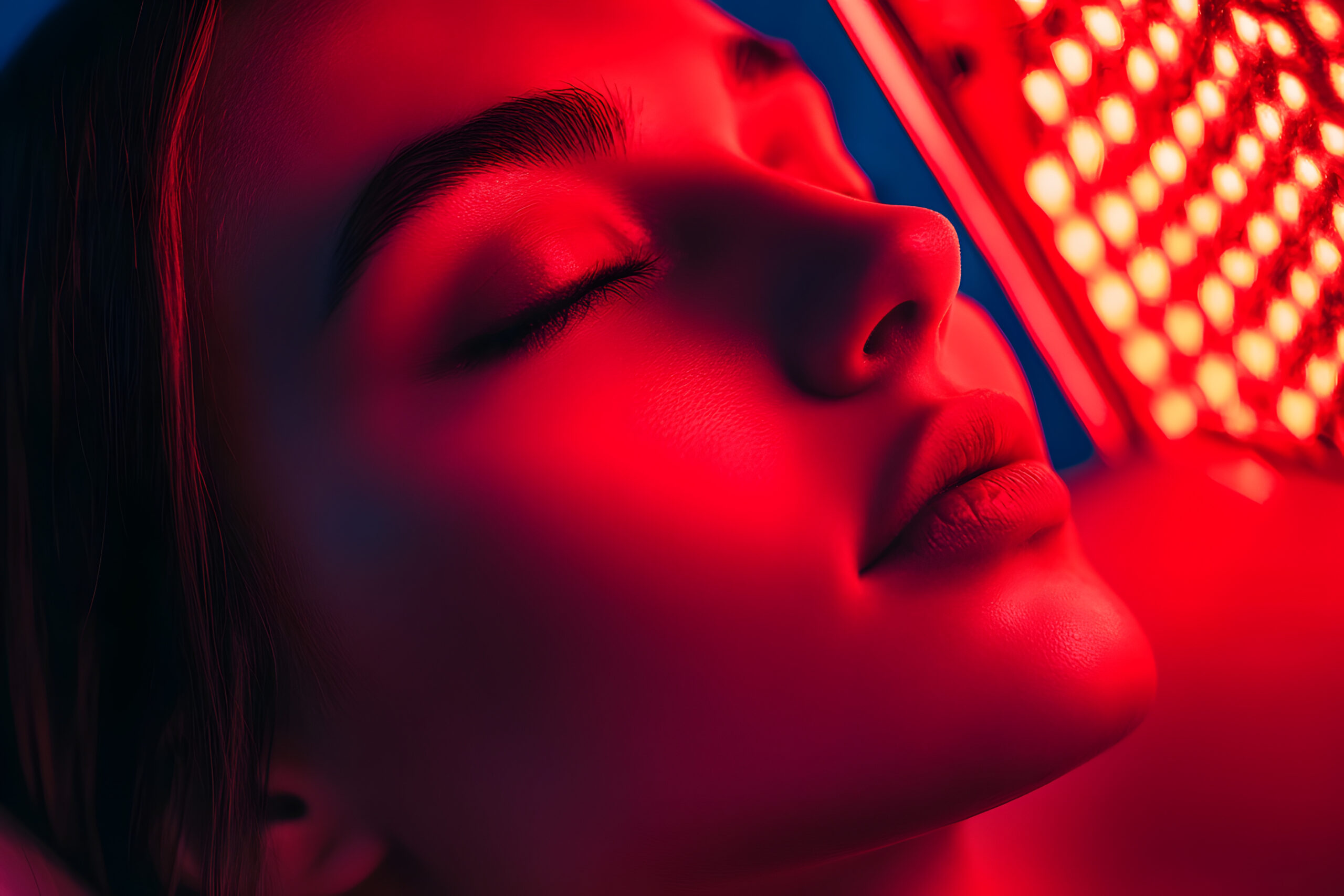
Red light therapy (RLT), also known as photobiomodulation, is a non-invasive light treatment that uses specific wavelengths of red and near-infrared light to stimulate cell function.
At the cellular level, RLT enhances the body’s natural processes—supporting tissue repair, reducing inflammation, and improving human skin health. Unlike UV or high-heat lasers, it works without damaging the skin or underlying tissue when used appropriately.
How Does Red Light Therapy Work in the Body?
The Science of Photobiomodulation
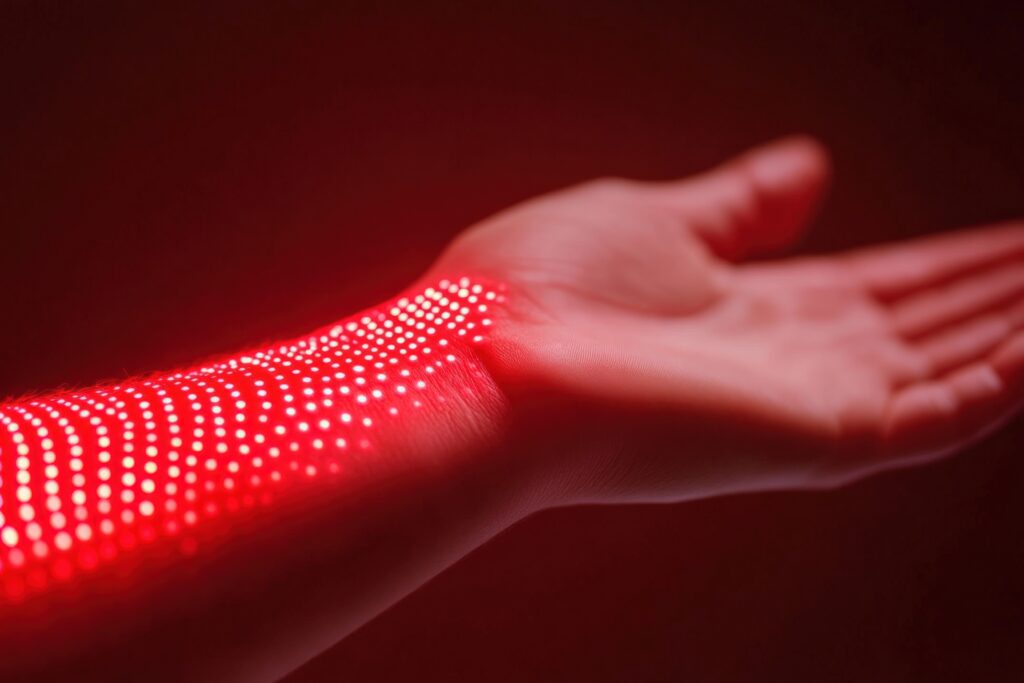
Photobiomodulation (PBM) is the scientific term for the biological effects triggered when red and near-infrared light is absorbed by the body. These wavelengths interact with chromophores in the mitochondria—particularly cytochrome c oxidase—to enhance the production of adenosine triphosphate (ATP), the energy molecule cells use for repair, regeneration, and function.
Beyond cellular energy, PBM has also been shown to:
- Improve local circulation
- Support collagen production
- Aid nerve regeneration
- support tissue healing
- reduce oxidative stress, and
- modulate inflammatory processes
This makes RLT a versatile tool for wellness professionals who specialize in non-pharmacological, non-invasive wellness options.
Can I Use Any Red Light?
Not all red lights are created equal, and not all deliver therapeutic value.
Effective red light therapy depends on specific wavelengths of light, typically in the red and near-infrared range. Lights must also deliver the correct power density (irradiance) and exposure duration to stimulate photobiomodulation at the cellular level.
Generic red bulbs, decorative LEDs, or underpowered panels often fall outside the therapeutic window. At best, they may offer mood lighting. At worst, they may mislead patients about results.
In contrast, clinical-grade RLT devices are designed for efficacy, safety, and repeatability. These systems are:
- Lab-tested for irradiance
- Built for consistent dosage
- Equipped with protocols that align with current research
The takeaway? In a clinical setting, using the right light isn’t just important—it’s essential for delivering results.
Is Red Light Therapy Safe?
Yes—when used as directed, red light therapy is considered very safe. It is non-invasive, non-thermal, and does not damage skin or tissue.
Its strong safety profile comes from thousands of clinical studies that have documented RLT’s success across dermatology, pain management, and recovery protocols.
That said, proper use matters. Protective eyewear is strongly recommended—especially for facial treatments or high-powered clinical devices. Clinicians should also screen for contraindications, including epilepsy, pregnancy (as a precaution), pacemakers, low blood pressure, and photosensitizing medications.
When best practices are followed, red light therapy presents minimal risk and stands out as one of the safest modalities available in the clinical toolbox.
Can You Do Too Much?
While red light therapy is generally safe, more isn’t always better. Overuse can potentially lead to diminishing returns or counterproductive effects, similar to how excessive exercise might lead to muscle strain instead of growth. It’s important to adhere to recommended guidelines regarding dosage, duration, and frequency to ensure optimal outcomes.
Generally, 2-3 sessions per week of 10-15 minutes for each treatment is considered safe. Consistency over time rather than increased intensity or duration per session tends to yield the best results.
Does Red Light Therapy Have Side Effects?
Some individuals may experience mild side effects, particularly if guidelines are not properly adhered to. These may include temporary skin redness, eye strain or discomfort, headaches, fatigue or dizziness, or dry skin.
Overall, side effects are rare and usually insignificant.
Choosing the Right Device: RLT for Home vs. Clinical Settings
Not all red light therapy devices are created equal.
Small panels and hand-held devices are often underpowered and designed for convenience not clinical outcomes. They offer limited treatment of skin tissue due to their small surface area, operate at lower irradiance (power output per unit area), and often lack the consistency needed for reliable, repeatable results. They are rarely up to the task of a professional setting and better for at-home use.
Clinical-grade devices—like full-body RLT beds—are engineered for depth, coverage, and results. These devices deliver:
- higher power densities
- optimized wavelength targeting
- variable treatment settings
- superior heat and energy distribution
- faster treatment sessions with greater skin surface coverage
And let’s be honest—few patients walk into your clinic wanting treatment on just one small area. If given the opportunity, they would likely opt for a full-body treatment and benefit on a larger scale. For real results across multiple systems or body regions, professional-grade equipment is more than a nice-to-have—it’s the standard.
Why Many Clinics Are Using the Wrong Devices
Despite the growing availability of powerful clinical devices, many clinics still rely on devices designed for home use. Often, this is the result of aggressive marketing, gaps in practitioner education, or budget-based decisions.
But here’s the problem: underpowered devices produce underwhelming results.
This can lead to:
- patient dissatisfaction
- reduced trust in the clinic’s recommendations
- missed revenue opportunities
- money wasted on ineffective devices
By contrast, clinics that invest in high-performance systems that have research behind the technology position themselves as leaders in innovative care and deliver outcomes patients rave about.
Choosing the right equipment, preferably one that is classified as a Class II Exempt medical device by the US FDA and Health Canada, is a strategic business move.
How and When to use RLT
RLT is an effective treatment for managing several conditions.
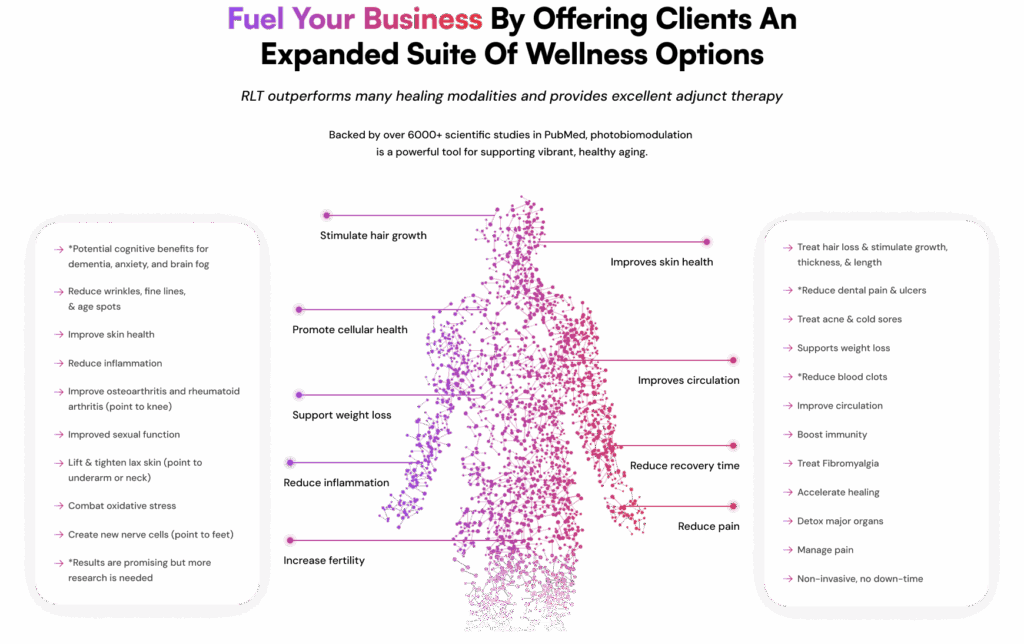
For most individuals, RLT is typically recommended several times a week. The exact frequency can vary depending on the specific condition being treated and the individual’s response to therapy.
Chiropractors use RLT in conjunction with chiropractic care to:
- reduce skeletal and muscle pain
- increase mobility
- decrease myofascial pain and muscle tightness
- create synergistic effects when combined with manual therapies
- promote long-term effects, not just mask pain
Naturopaths and Acupuncturists integrate RLT for:
- skin detoxification
- hormonal health
- enhanced meridian balancing and blood flow
- reduce localized inflammation
- facial rejuvenation
Med spas can use red light energy to help:
- accelerate post-procedure healing
- increase skin collagen metabolism
- improve facial skin rejuvenation
- acne treatment
- anti-aging treatment options
Treatment-Resistant Conditions
Across wellness disciplines, clinicians are finding that RLT performs particularly well in treatment-resistant scenarios, especially where:
- Chronic inflammation persists despite anti-inflammatory protocols
- Neuropathic pain doesn’t respond well to traditional analgesics
- Tissue healing is delayed, such as in diabetic wounds or post-operative recovery
- Mood and cognitive function are impaired, but pharmaceutical approaches are poorly tolerated or declined by the patient
- Skin conditions like rosacea or psoriasis continue to flare, even with topical or systemic interventions
In these situations, RLT offers a non-invasive, low-risk way to stimulate mitochondrial function and create conditions where healing becomes possible again. In effect, it doesn’t “treat the issue” in the traditional sense; it helps the body return to a healing state.
This makes it a powerful adjunct for clinicians looking to:
- Break through treatment plateaus
- Provide relief to patients who’ve “tried everything”
- Enhance the body’s response to other therapies
- Add value without adding friction to the clinical workflow
When properly positioned, RLT helps shift your clinic from reactive care to regenerative support, attracting patients who are looking for what’s next when nothing else has worked.
This Emerging Trend Means Now Is the Time to Act
The clinical world is only beginning to tap into the full potential of red light therapy. As awareness spreads, patients are becoming more informed and increasingly request treatments by device name, not just category.
Clinics that adopt early improve their patient outcomes while gaining a strategic edge in the market. Early adopters strengthen their reputation, increase patient retention through innovative care, and attract entirely new patient channels that wouldn’t have walked through the door otherwise.
Waiting could mean playing catch-up like many clinics did after spinal decompression and shockwave therapy shifted from fringe to standard care.
This is about so much more than just adding another modality to your clinic. It’s about future-proofing your practice by investing in technology that defines where wellness is headed next.
Knowledge is Your Secret Weapon – Keep up with clinical RLT
Become a VIP in a growing network of forward-thinking clinics expanding their treatment offerings with red light therapy. Subscribe for insights on smart implementation, patient education, and low-effort marketing strategies that actually work. Join today!
Conclusion: RLT Is A Light That’s Hard to Ignore
Red light therapy is no longer fringe. It’s the bridge between futuristic “med-bed” innovations and real-world clinical results. Backed by science and growing patient demand, it is poised to become a cornerstone in modern wellness care.
Clinics that embrace this innovation today will be at the forefront of patient satisfaction, innovation, and long-term profitability.
Whether you’re treating pain, accelerating recovery, or expanding your aesthetic offerings, red light therapy offers a safe, evidence-informed, and scalable solution ready to meet your clinic’s evolving needs.
FAQs
Is RLT a cold laser?
Red light therapy is often referred to as a “cold laser” or “low-level laser therapy” (LLLT), though not all red light devices use lasers—some use LEDs. The term cold laser simply means the light doesn’t produce heat strong enough to burn tissue. Unlike ablative cosmetic lasers that destroy the skin’s surface to stimulate regrowth, red light therapy works at lower energy levels to stimulate cell repair and regeneration beneath the skin, without causing damage or pain. It’s non-invasive, gentle, and generally well-tolerated.
Is RLT the same as infrared?
Not exactly. Red light is visible light; infrared is invisible. Most RLT devices use both. Red light targets surface-level skin, while near-infrared penetrates deeper into muscles and joints.
What conditions can red light therapy treat?
RLT can be used for chronic pain, inflammation, joint disorders, neuropathy, skin conditions, hair loss, wound healing, and so much more. See the graphic above for further examples. It is also gaining traction for post-op recovery, tissue repair, and a treatment option to use in resistant conditions.
How long does a typical session last?
Clinical treatments usually range from 10 to 15 minutes in length, 2-3 times per week when starting, depending on the device and condition treated.
What does it feel like during treatment?
Unlike more aggressive modalities like shockwave therapy, RLT is painless, calming, and often described as restorative. Most patients feel no heat or discomfort, though some may notice a gentle warmth from the bright lights during treatment. This is from the light emitting diodes (LEDs), which are designed to have stimulatory effects without damaging tissue.